
January 28th, 2026 - Zed van der Vyver
The Ultimate Guide to Plumbing in Thailand: Managing Water Pressure and Tropical Pipes
Whether you are fixing a leaky faucet in a Bangkok condo or building a villa in Phuket, understanding your plumbing is essential. In Thailand’s tropical climate, plumbing isn’t just about moving water; it’s about managing high humidity, heat-induced expansion, and the constant battle for consistent water pressure.
Think of your home’s plumbing like the circulatory system of a human body. The pipes are your veins, the water pump is your heart, and the filters are your kidneys. If the heart is too weak, the water won't reach the "extremities" (like your second-floor shower); if the veins are clogged, you’re in for a messy headache.
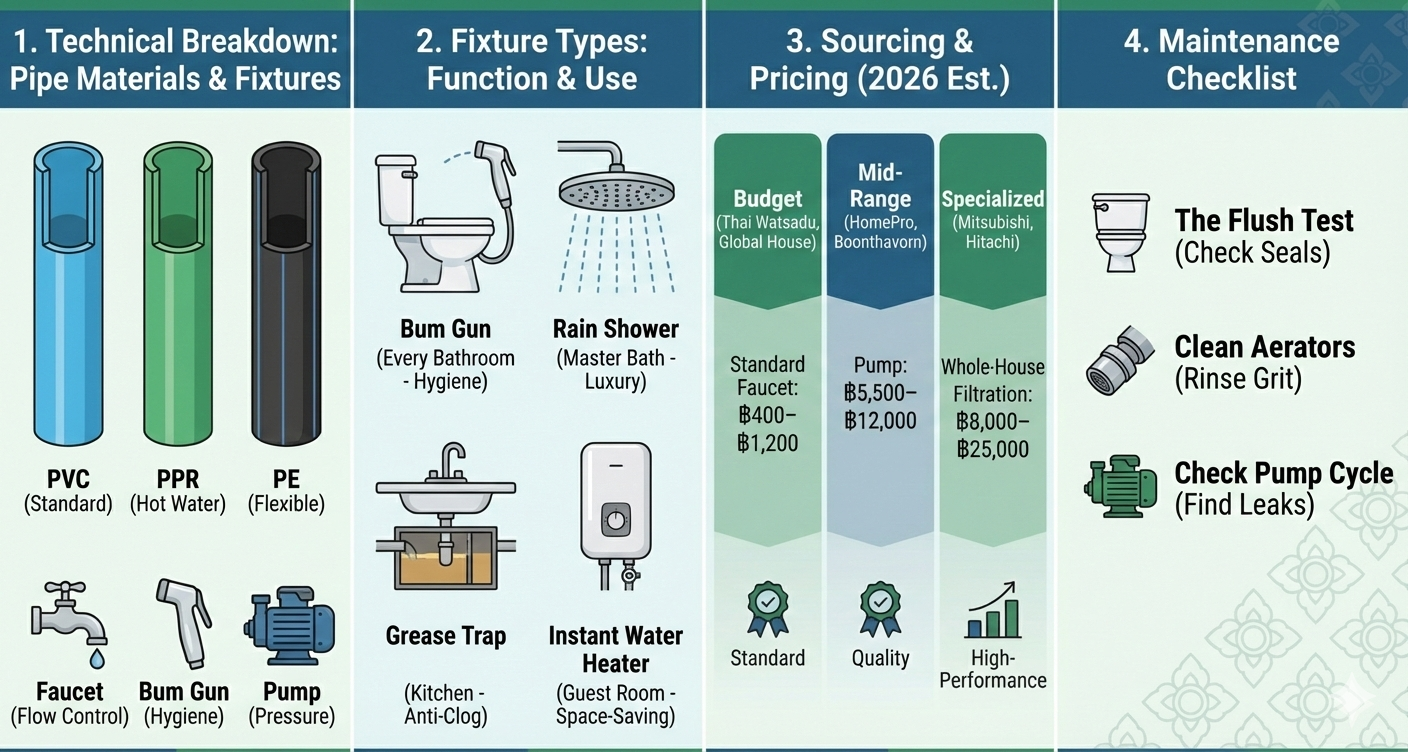
1. The Technical Breakdown: Understanding the "Moving Parts"
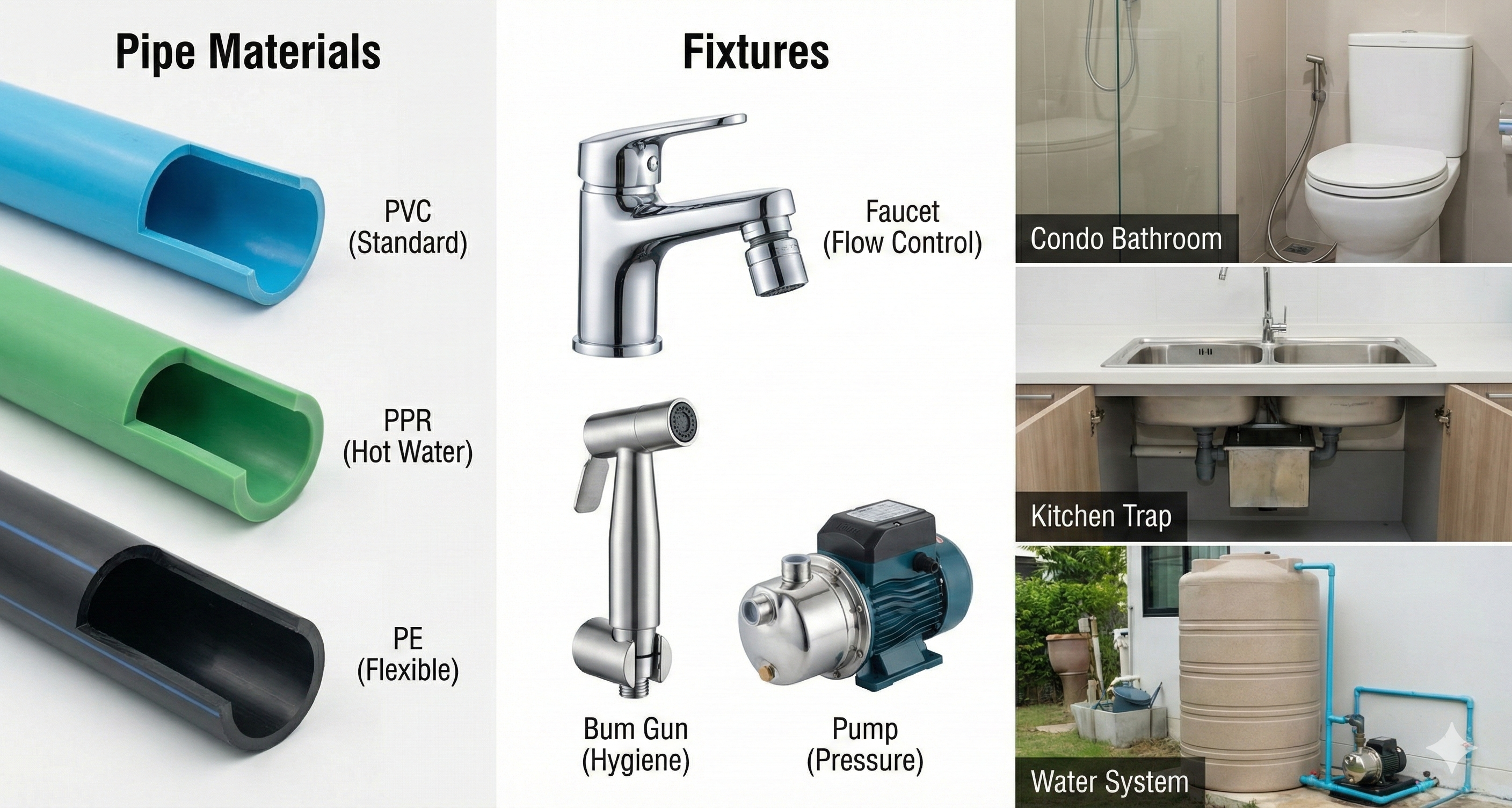
Before you call a plumber or head to the hardware store, you need to know the "alphabet soup" of pipe materials and parts used in Thailand.
Pipe Materials: The Veins
-
PVC (Blue): The most common pipe in Thailand. It is used for cold water and drainage. Why it matters: It’s cheap and easy to install, but it can become brittle if left in direct sunlight.
-
PPR (Green): These pipes are joined by melting the plastic together with heat. Why it matters: Unlike blue PVC, PPR can handle hot water and high pressure without leaking at the joints. It’s the "premium" choice for modern homes.
-
PE (Black): Flexible, tough pipes often used for underground main lines. Why it matters: They can bend around obstacles and won't crack if the ground shifts slightly—a common issue in the soft soil of Central Thailand.
The "Heart" of the System: Pumps and Tanks
-
Automatic Constant Pressure Pumps: These ensure your shower stays strong even if someone starts the dishwasher.
-
Storage Tanks: In Thailand, water supply can be inconsistent. A "buffer tank" (usually 1,000–2,000 liters) acts like a battery for your water, storing municipal water so you aren't left dry during a local pipe repair.
2. Water Fixtures: Which One Fits Your Life?
Choosing fixtures in Thailand is about more than just looks; it's about functionality in a high-usage environment.
| Fixture Type | Best Use Case | The "Why it Matters" Factor |
| Bum Gun (Bidet Spray) | Every Bathroom | The "Handheld Bidet." It reduces toilet paper waste and is a staple of Thai hygiene. Always install a shut-off valve next to it in case it leaks. |
| Rain Shower | Master Bathrooms | Provides a luxury feel, but requires a high-wattage water heater (at least 4,500W–6,000W) to keep the water warm at high flow rates. |
| Grease Trap | Kitchen Sinks | A small box under the sink that catches oil. In Thailand’s heat, grease in pipes rots quickly and smells; this trap prevents "fatbergs" from clogging your drains. |
| Instant Water Heater | Guest Rooms/Condos | Small boxes that heat water "on the fly." They save space but can struggle to provide very hot water during the (rare) cool season. |
3. Sourcing & Market Data: Where to Buy in Thailand
Plumbing supplies are widely available, but the quality of "internals" (the bits you don't see) varies wildly.
Top Suppliers
-
Budget (The DIY Route): Thai Watsadu and Global House. Perfect for buying bulk PVC pipes, basic connectors, and simple faucets.
-
Mid-Range (Quality & Style): HomePro and Boonthavorn. These are the "go-to" spots for reputable brands like COTTO, American Standard, and Kohler. They offer better warranties and "Grade A" ceramic valves.
-
Specialized (Pumps & Systems): Mitsubishi and Hitachi are the kings of water pumps in Thailand. For high-end PPR piping systems, look for Thai PPR or SCG authorized dealers.
2026 Pricing Tiers (Estimated)
Note: Prices vary by brand and material thickness.
| Item | Estimated Price (THB) | What You Get |
| Standard Bathroom Faucet | ฿400 – ฿1,200 | Stainless steel or chrome-plated plastic. |
| Automatic Water Pump | ฿5,500 – ฿12,000 | Reliability and consistent pressure for 2–3 story homes. |
| Whole-House Filtration | ฿8,000 – ฿25,000 | Removes sediment and chlorine before water enters your tank. |
4. Maintenance: The "Layman's" Checklist
Preventing a flood is much cheaper than fixing one. Follow these three simple rules:
-
The "Flush" Test: Once a month, check your toilet tank. If you hear it "hissing" or refilling when not in use, the rubber flapper is worn out. Replacing a ฿50 rubber seal can save you thousands in water bills.
-
Clean the Aerators: Thailand’s water often contains "sediment" (tiny bits of sand). If your faucet pressure feels weak, unscrew the tip (the aerator) and rinse out the grit. It’s like cleaning a clogged straw.
-
Check the Pump "Cycle": If your water pump turns on and off every few seconds when no water is running, you have a hidden leak. Check your garden hoses and "bum guns" first!
5. Summary & Next Steps
Plumbing in the tropics is all about handling the heat and ensuring the water stays moving. If you are in a high-rise condo, prioritize high-quality shut-off valves to prevent flooding your neighbors. If you are in a landed house, invest in a reputable pump and a covered storage tank to keep your water cool and pressurized.