
April 13th, 2026 - Zed van der Vyver
The Ultimate Guide to Flooring in Thailand: Finding Your Footing in the Heat
When you’re standing barefoot in a Thai home, the floor beneath you is doing more than just holding up your furniture. It’s either helping you stay cool or trapping the tropical humidity like a sponge.
Think of your flooring like the shoes for your house. You wouldn’t wear heavy winter boots to a Bangkok market, right? You’d want something breathable, water-resistant, and easy to clean. In Thailand, your floor has to survive three main "villains": high humidity, intense heat, and the occasional flash flood or "spill" from a rainy-season window.
The Technical Breakdown: Understanding the "Moving Parts"
Before you get seduced by a pretty pattern at the showroom, you need to understand the material's DNA. Here is what's actually under your feet:
The Material Core: The Skeleton
-
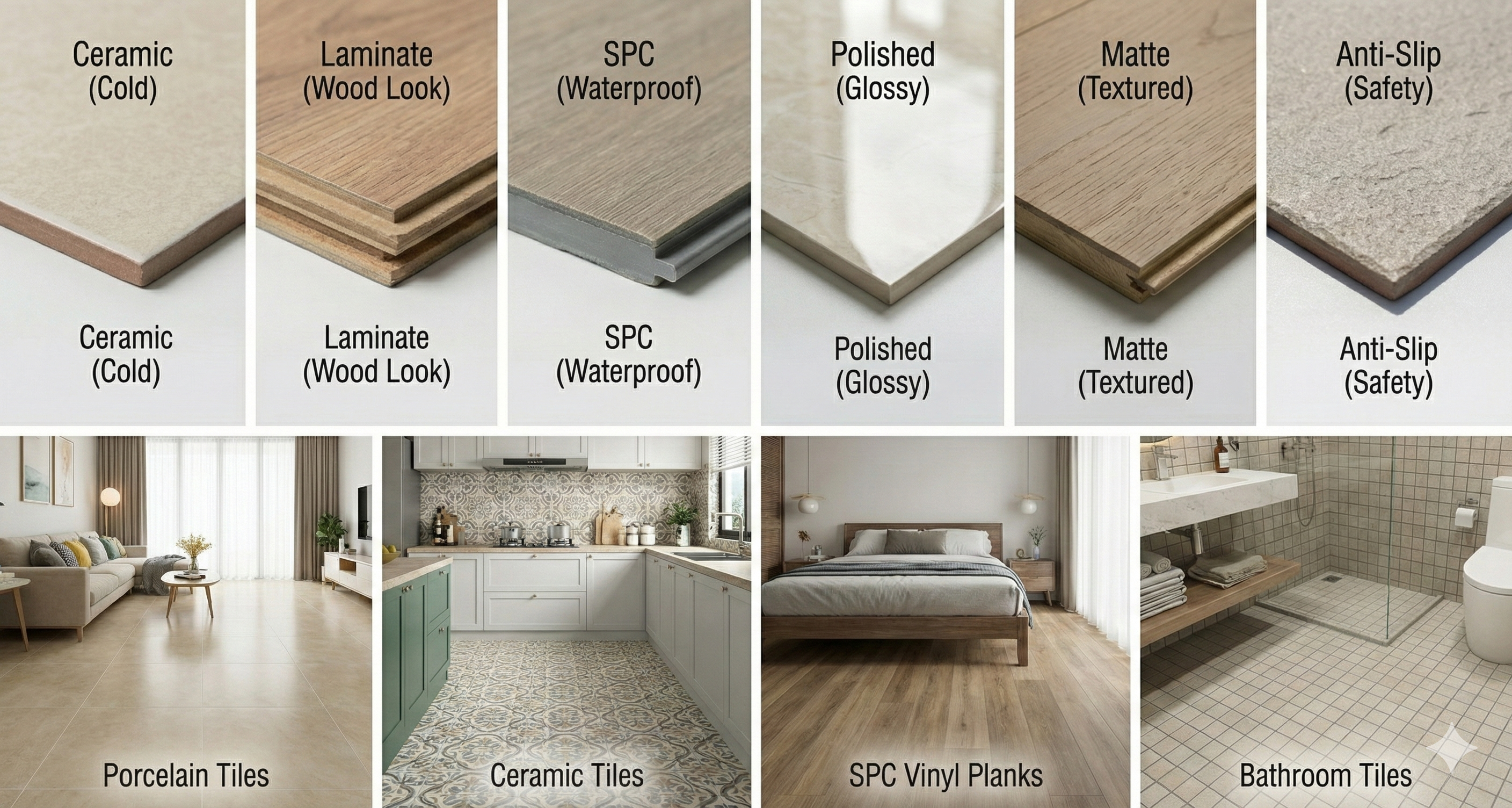
Ceramic & Porcelain: These are "fired" in a kiln at high temperatures. Porcelain is denser and absorbs almost zero water. Why it matters: It stays naturally cold, which acts like a "heat sink" for your room, keeping the air temperature lower.
-
SPC (Stone Plastic Composite): A modern "hybrid" floor. It's a mix of limestone powder and plastic. Why it matters: It looks exactly like wood but is 100% waterproof and won't warp or expand when the humidity hits 90%.
-
Laminate: Layers of compressed wood fiber with a printed "photo" layer on top. Why it matters: It’s soft and warm to walk on, but it is the "Kryptonite" of moisture. If it gets soaked, it will swell up like a biscuit in tea.
-
Engineered Wood: Real wood on top, with layers of plywood underneath. Why it matters: It gives you the luxury of real Teak or Oak but is more stable than solid wood planks, which tend to "breathe" and crack in the tropics.
Surface Textures: The Grip
-
Polished (Glossy): Reflects light and makes a room feel huge. Danger: It becomes a "skating rink" if even a drop of water hits it.
-
Matte/Satin: Modern and hides scratches well. Perfect for high-traffic living rooms.
-
Anti-Slip (R-Rating): Essential for bathrooms or balconies. Look for an R10 or R11 rating to ensure you don't slip during a monsoon downpour.
Flooring Types: Which One Fits Your Life?
Choosing a floor is about balancing your love for style with the reality of living in the tropics.
| Flooring Type | Best Use Case | The "Why it Matters" Factor |
| Porcelain Tile | Living Rooms & Kitchens | The most "Thai-proof" option. It’s indestructible, easy to mop, and stays freezing cold. |
| SPC (Vinyl) | Bedrooms & Condos | It mimics wood perfectly but can be installed in a single day. Great for walking barefoot without the "hard" feel of tile. |
| Polished Concrete | Industrial Lofts / Cafes | Very "cool" (literally and stylistically). It lasts forever but requires a professional team to pour and seal correctly. |
| Teak Wood | Luxury Traditional Homes | The king of Thai materials. It’s naturally oily, which helps it resist termites, but it requires a huge budget. |
Sourcing & Market Data: Where to Buy in Thailand
You don't have to go to a specialized boutique to get great floors. Thailand has "Big Box" stores that are incredibly well-stocked.
Top Suppliers
-
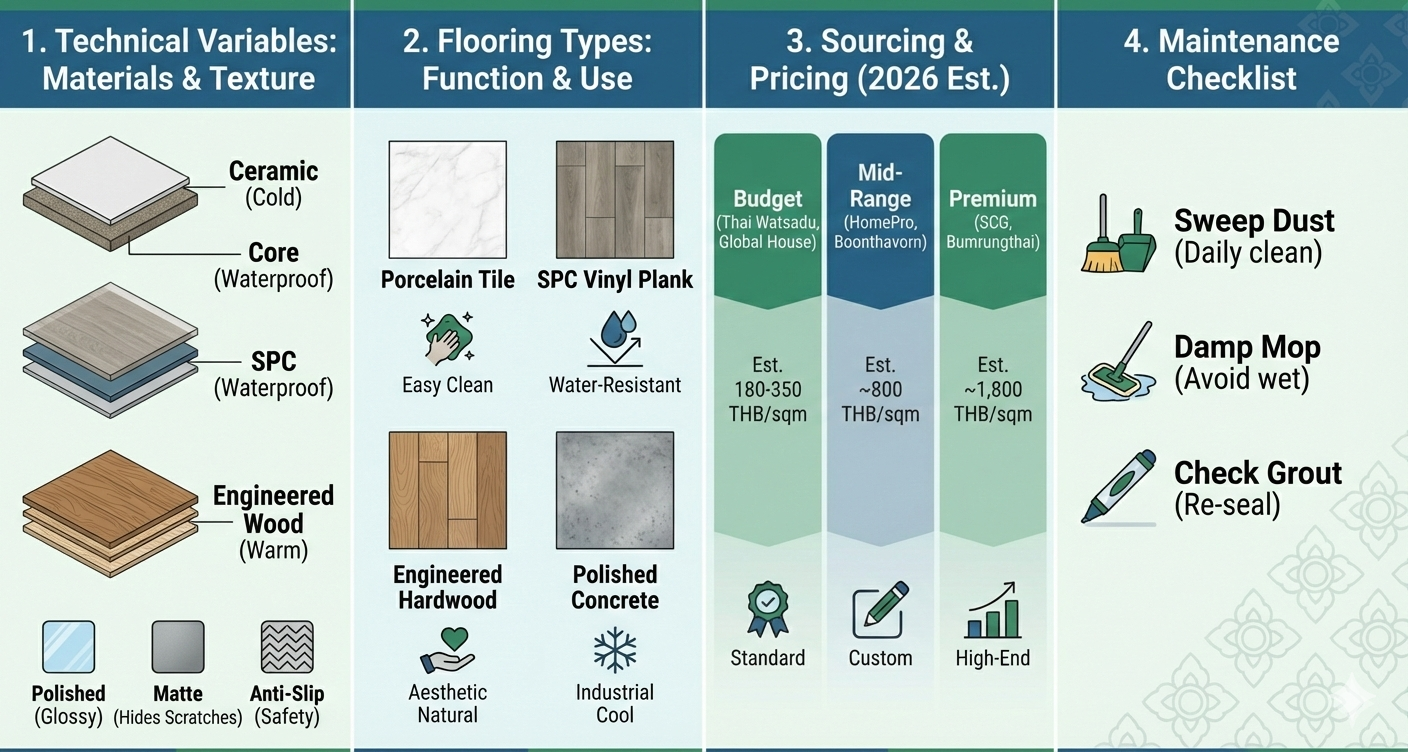
Budget (The Value Kings): Thai Watsadu and Global House. If you are looking for standard tiles or basic SPC for a rental property, these are the best starting points.
-
Mid-Range (Style & Variety): HomePro and Boonthavorn. Boonthavorn is famous for its "Tile Gallery," where you can see thousands of designs in person. They also offer excellent 3D design services for free.
-
Premium (The Specialists): SCG (Siam Cement Group) and Bumrungthai. These brands offer high-end engineered woods and imported Italian marbles for those looking for a "designer" finish.
2026 Pricing Tiers (Estimated)
Prices are per square meter (sqm) and vary based on brand and thickness.
| Quality Tier | Estimated Price (THB/sqm) | What You Get |
| Economy Ceramic | ฿180 – ฿350 | Basic 30x30 or 60x60 tiles. Functional but simple designs. |
| Standard SPC (4-5mm) | ฿450 – ฿750 | Waterproof "wood" planks with a click-lock system. |
| Premium Porcelain | ฿800 – ฿1,500 | Large-format (60x120) tiles with marble or stone patterns. |
| Engineered Hardwood | ฿1,800 – ฿3,500+ | Real Oak or Teak surface with high-stability core. |
Pro Tip: Always buy 10% more than your actual floor area. Tiles break during cutting, and if you run out, the next "batch" at the store might have a slightly different color shade!
Maintenance: The "Barefoot" Checklist
To keep your floors looking like a luxury hotel, follow these three simple rules:
-
The "Anti-Sand" Protocol: Thailand is dusty. Sand acts like sandpaper on SPC and wood floors. A quick daily sweep or a robot vacuum is the best way to prevent scratches.
-
Avoid the "Soggy Mop": When cleaning SPC or Laminate, use a damp mop, not a dripping wet one. Even "waterproof" floors have joints where water can seep into the sub-floor and cause smells.
-
Check the Grout: In bathrooms, the white lines between tiles (grout) can turn black with mold. Every 2-3 years, use a "grout pen" or have a professional re-grout to keep it hygienic.
Summary & Next Steps
If you want a "set it and forget it" floor, go with Porcelain tiles. If you want the cozy, warm look of a Nordic home without the fear of termites or water damage, SPC is your best friend.