
May 4th, 2026 - Zed van der Vyver
The Ultimate Guide to Plastering in Thailand: Achieving Mirror-Smooth Walls in the Tropics
If you’re building or renovating in Thailand, the finish on your walls is more than just an aesthetic choice. In a tropical climate, plaster is the "skin" of your home. It’s what stands between your structural bricks and the relentless humidity, monsoon rains, and blistering sun.
Think of plastering like applying moisturizer and sunscreen to your house. Done correctly, it keeps the building "hydrated" (supple enough to avoid cracks) while acting as a barrier against the elements. Done poorly, and your walls will soon look like a dry, cracked riverbed.
The Technical Breakdown: Understanding the "Moving Parts"
Before you hire a contractor, you need to know what’s going into the bucket. Plastering in Thailand is usually a two-to-three-step process involving different materials for different "layers."
The Base Layers: The Foundation
-
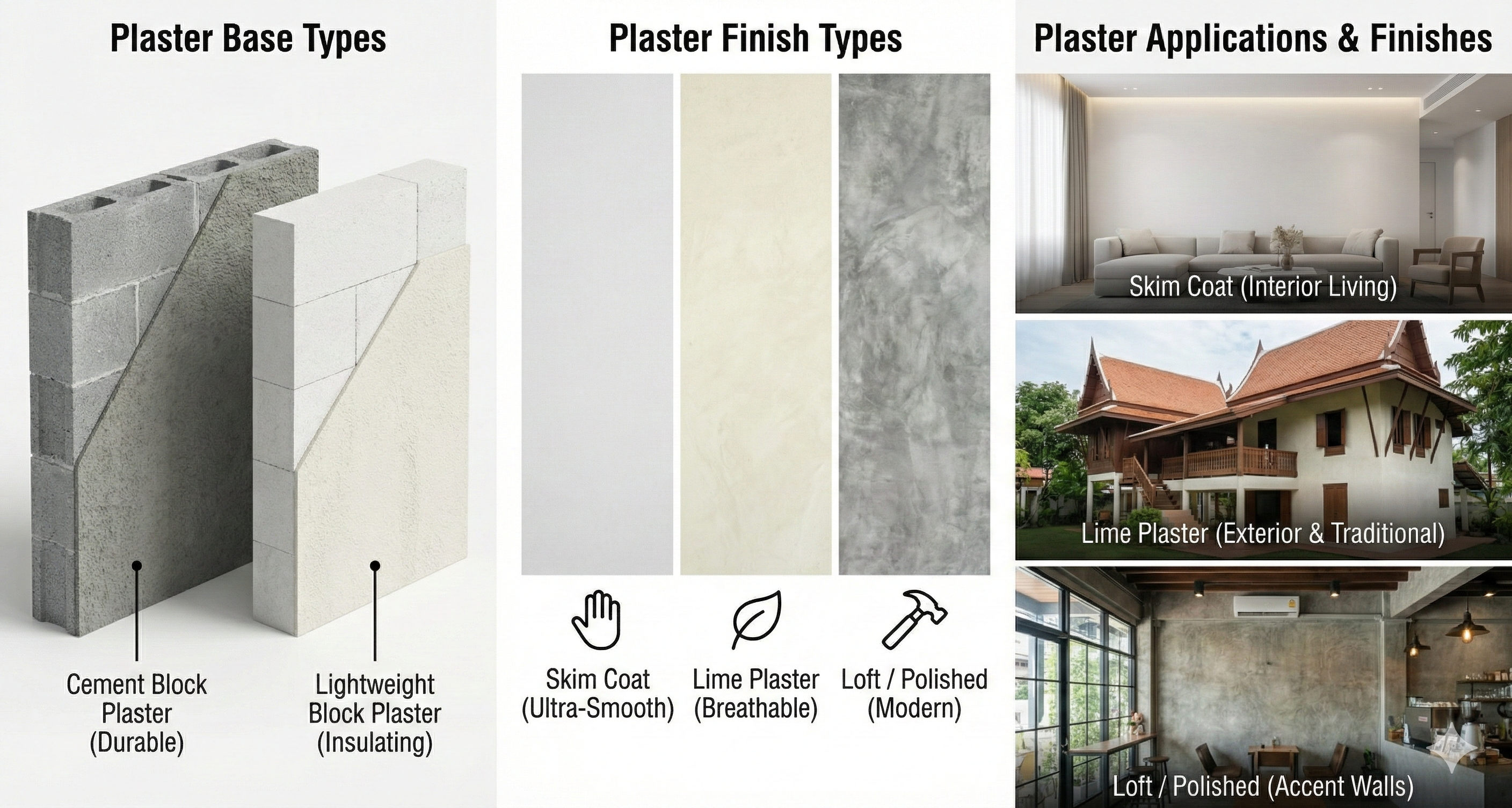
Cement Plaster (Poon-ฉาบ): The heavy-duty workhorse. It’s a mix of Portland cement, fine sand, and water.
-
Why it matters: This provides the structural thickness and protection for the "Mon" (red) or "Muan-Beo" (lightweight) bricks beneath.
-
-
Lightweight Block Plaster: Specifically formulated for AAC blocks (white blocks). It contains special additives to prevent the block from sucking all the water out of the plaster too quickly.
-
Why it matters: Using regular cement on white blocks almost guarantees cracks within six months.
-
The Finish Layers: The "Face"
-
Skim Coat (Poon-Skim): A super-fine, thin layer applied over the base plaster to remove every tiny grain of sand.
-
Why it matters: This is how you get that "hotel-smooth" feel. If you want high-gloss paint or wallpaper, a skim coat is non-negotiable.
-
-
Gypsum Plaster: Primarily used for internal walls and ceilings. It dries white and is much smoother than cement.
-
Why it matters: It’s easier to sand and finish, making it the favorite for interior decorators.
-
Plaster Types: Which One Fits Your Project?
Choosing the right plaster is like choosing the right outfit—you wouldn't wear a tuxedo to the beach, and you shouldn't use interior gypsum on an exterior garden wall.
| Plaster Type | Best Use Case | The "Why it Matters" Factor |
| Base Cement | Exterior Walls & Wet Areas | Tough, water-resistant, and provides the "bulk" of the wall's protection. |
| Skim Coat | Interior Living Rooms | Hides all imperfections; makes the wall feel like glass under your hand. |
| Lime Plaster | Eco-Homes / Traditional | "Breathes" exceptionally well, naturally resisting mold in humid areas. |
| Loft / Polished | Accent Walls | A "raw" concrete look that is pre-tinted. No painting required! |
| Waterproof Render | Bathrooms & Basements | Contains "Sika" or similar additives to stop water seeping through to the next room. |
Sourcing & Market Data: Where to Buy in Thailand
You can find plastering supplies in every corner of the country, from small village shops to massive "Category Killers" in the city.
Top Suppliers
-
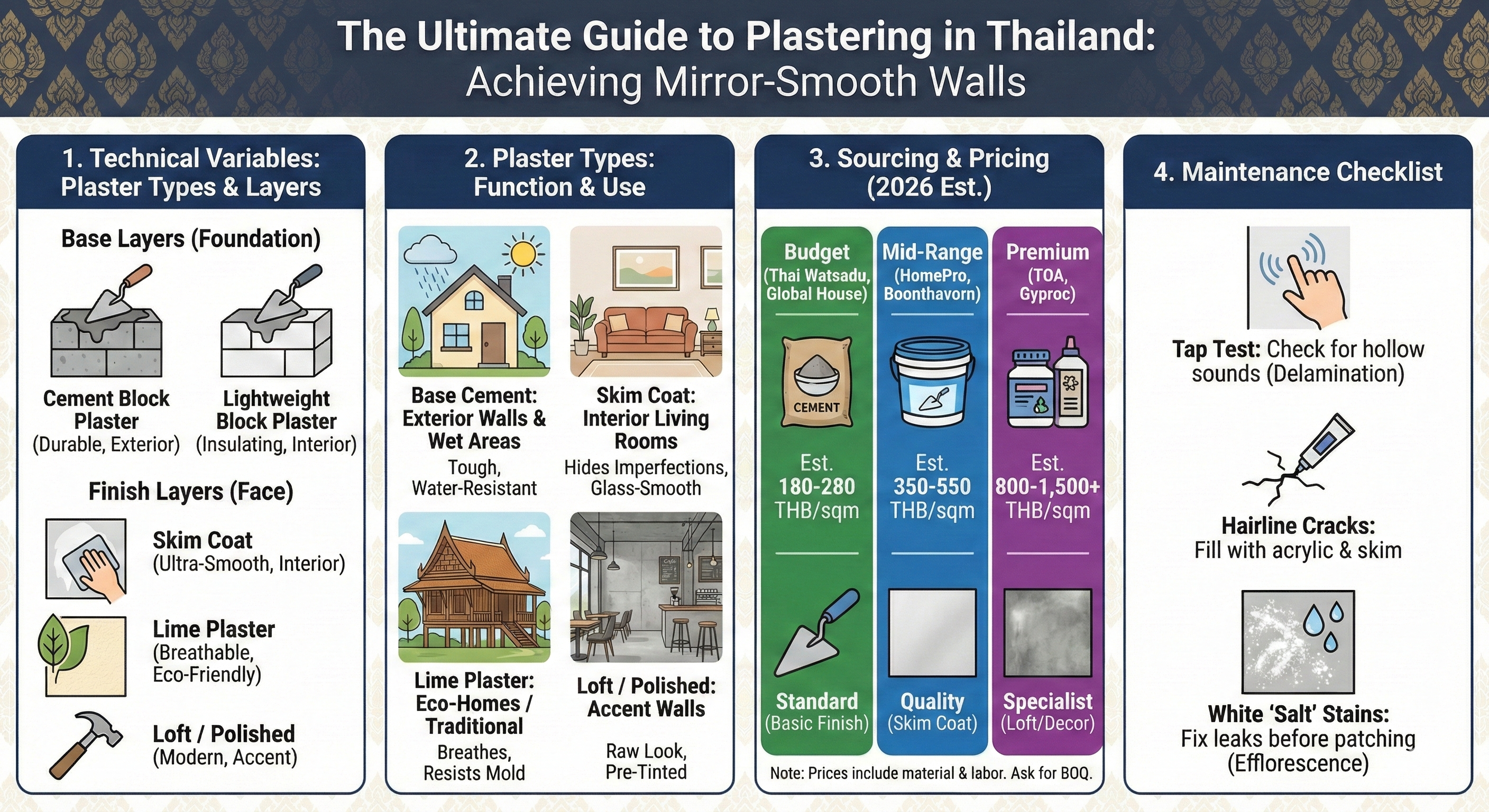
Budget (The DIY Route): Thai Watsadu and Global House. These are perfect for buying bags of "TPI" or "Tiger" brand cement in bulk. Best for standard renovations.
-
Mid-Range (Quality & Variety): HomePro and Boonthavorn. Here you’ll find specialty skim coats from brands like Lanko (Sika) or SCG. They often have "Loft" kits that are user-friendly for DIYers.
-
Premium (Specialist Finishes): TOA (for advanced chemical additives) and Gyproc (Saint-Gobain). These brands offer high-performance finishing plasters designed to resist the "sesame cracks" (tiny hairline fractures) common in Thai heat.
2026 Pricing Tiers (Estimated)
Note: Prices include material and labor for a standard finish.
| Quality Tier | Estimated Price (THB/sqm) | What You Get |
| Basic Plastering | ฿180 – ฿280 | Standard cement finish, ready for primer. |
| Full Skim Coat | ฿350 – ฿550 | 2-3 layers of skim for a mirror-smooth finish. |
| Loft / Decorative | ฿800 – ฿1,500+ | Specialized textures, wax coatings, and artistic labor. |
Pro Tip: Always ask your contractor for a "BOQ" (Bill of Quantities). If they just give you a "lump sum" price, they might be skimping on the quality of the cement mix or skipping the skim coat entirely.
Maintenance: The "Layman's" Checklist
A good plaster job should last 20+ years, but the Thai climate is aggressive. Keep an eye on these three things:
-
The "Tap" Test: If a section of wall sounds "hollow" when you tap it, the plaster has detached from the bricks (delamination). This usually happens due to moisture. It needs to be chipped out and patched before it falls off.
-
Hairline Cracks: These are common as a new house "settles." Don't panic—a tube of acrylic filler and a quick skim of "Poon-Skim" will hide these perfectly.
-
White "Salt" Stains: If you see white powder appearing on the wall (efflorescence), water is leaking inside the wall. Fix the leak first, or the new plaster will just peel off again.
Summary & Next Steps
Plastering is the difference between a house that looks "under construction" and a home that feels premium. If you are building a new villa, insist on a lightweight block plaster for the base and a Lanko skim coat for the finish.