
June 8th, 2026 - Zed van der Vyver
The Ultimate Guide to Roofing in Thailand: Protecting Your Home from Sun and Monsoon
If you are building or re-roofing a home in Thailand, your roof is more than just a lid for your house—it is a high-performance shield. In the tropics, a roof has two grueling jobs: reflecting the intense "hammering" sun and shedding massive amounts of water during the six-month rainy season.
Think of your roof like a giant hat and an umbrella combined. If the hat is too thin, your head (the house) gets hot. If the umbrella has a tiny hole, everything underneath gets soaked. Choosing the right materials is the difference between a cool, quiet sanctuary and a hot, leaky nightmare.
The Technical Breakdown: Understanding the "Moving Parts"
A roof isn't just the tiles you see from the street. It is a system of layers working together to keep you comfortable.
Frame Materials: The Backbone
-
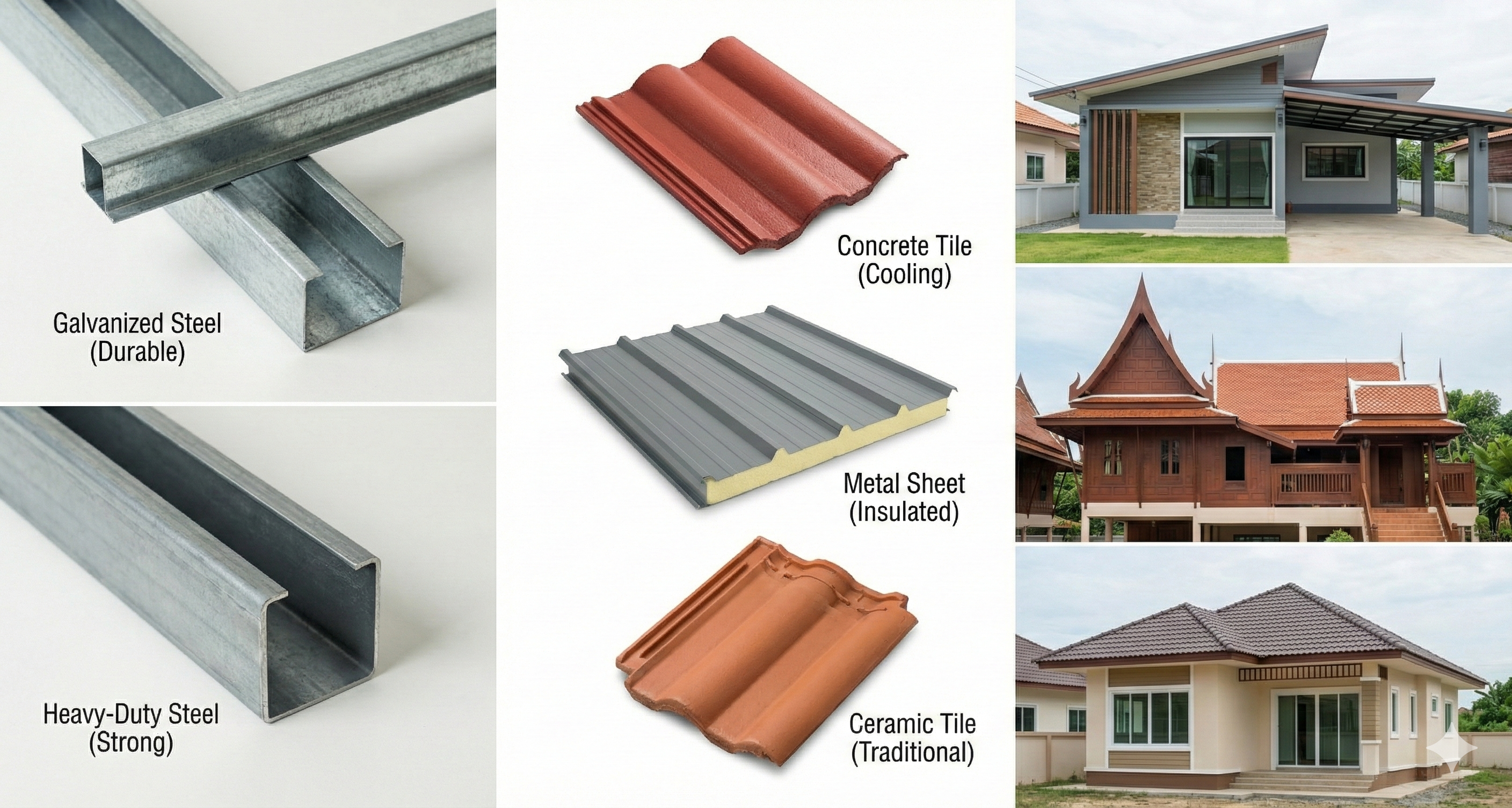
Galvanized Steel: The modern standard. It is lightweight and coated to prevent rust. Why it matters: It resists the high humidity of Thailand better than traditional wood, which can rot or be eaten by termites.
-
C-Channel Steel: Thicker, heavy-duty steel used for larger homes. It provides the "strength" needed to hold up heavy clay or concrete tiles.
Roofing Materials: The Outer Shield
-
Concrete Tiles: The most popular choice for modern Thai homes. They are heavy, durable, and excellent at blocking heat.
-
Metal Sheet (PU Foam Integrated): Large panels of coated steel. Why it matters: These are fast to install and cheap, but without "PU Foam" (an insulation layer), they sound like a drum set during a rainstorm.
-
Ceramic/Clay Tiles: The "premium" traditional look. They stay cool naturally and don't fade in the sun, but they are fragile and expensive.
Insulation: The "Cooling" Layer
-
Reflective Foil: A thin, shiny sheet placed under the tiles to bounce heat back up.
-
Stay-Cool Blanket: Thick fiberglass wool placed on top of the ceiling. Think of this like a cooler box—it keeps the air-conditioned air inside your rooms and the attic heat out.
Roofing Types: Which One Fits Your Life?
Choosing a roof style is like choosing a wardrobe—you need the right "outfit" for the weather in your specific region.
| Roof Type | Best Use Case | The "Why it Matters" Factor |
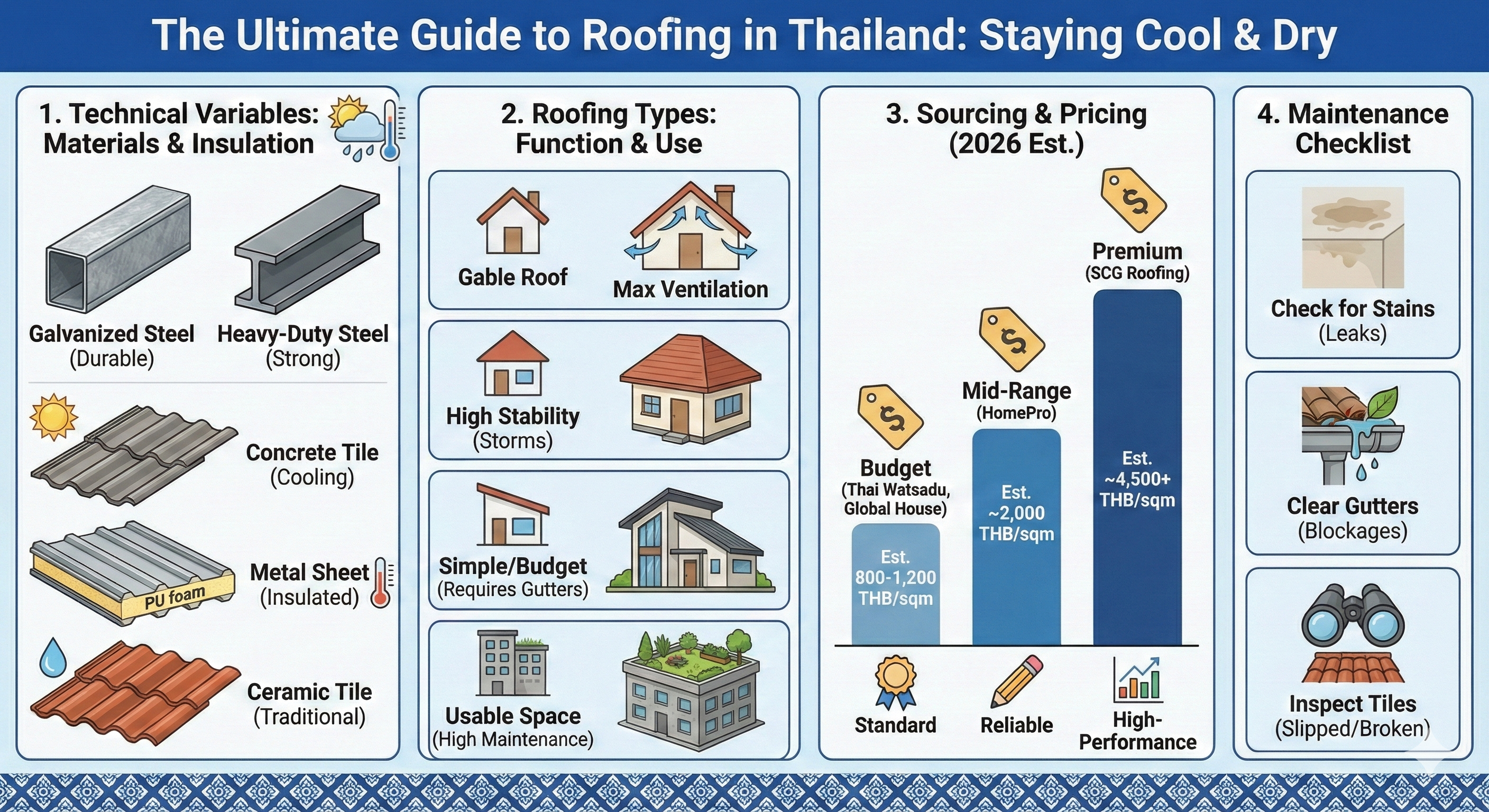
| Gable (Triangle) | Traditional Homes | Excellent ventilation. The "attic" space lets hot air rise away from your living area. |
| Hip (Pyramid) | Windy/Coastal Areas | Sloped on all four sides. It is the most stable shape during tropical storms and high winds. |
| Lean-to (Shed) | Modern/Budget Builds | A single slope. Very cheap and easy to build, but needs high-quality gutters to handle the massive water runoff. |
| Flat (Concrete) | Rooftop Gardens | Great for extra space, but in Thailand, these are "leak magnets" if not waterproofed perfectly every 3–5 years. |
Sourcing & Market Data: Where to Buy in Thailand
You can source roofing materials from nationwide retailers or specialized roofing centers that offer "Total Solution" packages (design + materials + install).
Top Suppliers
-
Budget (DIY & Extensions): Thai Watsadu and Global House. Ideal for buying metal sheets or replacement tiles for small repairs.
-
Mid-Range (Reliable Standards): HomePro. Great for sourcing high-quality insulation and modern concrete tiles with warranties.
-
Premium (The Gold Standard): SCG (Siam Cement Group). Their "SCG Roofing Centers" provide end-to-end service. They use drones to measure your roof and provide specialized teams that guarantee a "no-leak" finish.
2026 Pricing Tiers (Estimated)
Note: Prices include materials and basic labor per square meter (sqm).
| Quality Tier | Estimated Price (THB/sqm) | What You Get |
| Economy Metal Sheet | ฿800 – ฿1,200 | Basic steel panels, loud in rain, basic foil insulation. |
| Standard Concrete | ฿1,500 – ฿2,500 | Durable tiles (SCG/CPAC), sturdy steel frame, heat foil. |
| Premium Ceramic | ฿3,500 – ฿5,500+ | Luxury ceramic tiles, thick PU foam or wool insulation, 10+ year leak warranty. |
Maintenance: The "Layman's" Checklist
You don't need to climb a ladder to keep your roof healthy. Just watch for these three warning signs:
-
The "Ghost" Stains: Look at your white ceilings. If you see yellow or brown circles, you have a "micro-leak." Fix it in the dry season (November–February) before it becomes a waterfall in May.
-
Gutter Gardens: If you see plants growing in your gutters, they are blocked. Blocked gutters back up and push water under your tiles and into your walls. Clean them after the leaves fall in "winter."
-
The "Slipped" Tile: Every year, use binoculars to look at your roof. If one tile looks crooked or "out of line," a storm has shifted it. A 500-baht repair today prevents a 50,000-baht floor replacement later.
Summary & Next Steps
In Thailand, heat is your daily enemy, but rain is your seasonal threat. If you are on a budget, Metal Sheet with thick PU Foam is the best "bang for your buck." If you want a quiet, forever-home, go with SCG Concrete Tiles and thick ceiling insulation.